Should I Change My Brake Fluid?
The Critical Maintenance Service Most Drivers in Chantilly Overlook—Until It’s Too Late
Think about the last time you had your brake fluid changed.
If you’re like most drivers in Chantilly , South Riding , or Centreville , your answer might be, “I don’t remember.” That’s not unusual—but it is dangerous. Because while oil changes and tire rotations get all the attention, brake fluid quietly plays one of the most important roles in your vehicle’s safety—and when it’s neglected, it can lead to brake failure, expensive repairs , and avoidable risk.
At Main Street Tire and Auto , we’ve seen what happens when brake fluid is ignored for too long. In this article, we’ll walk you through exactly why brake fluid matters, how often to change it, and what to watch for—so you can drive with full confidence every time you hit the road.
What Does Brake Fluid Do?
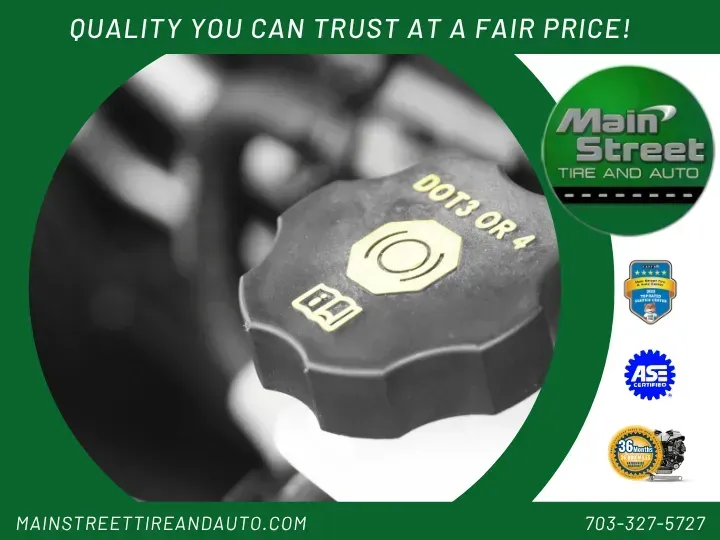
Brake fluid is the unsung hero of your vehicle’s brake system. It’s a hydraulic fluid that transfers the pressure from your foot on the brake pedal to the calipers or wheel cylinders that stop your car.
When brake fluid is clean and fresh, it:
-
Delivers even brake force to all wheels
-
Keeps your ABS (anti-lock braking system) responsive
-
Protects against internal corrosion inside your brake lines and calipers
-
Maintains braking power even during hard stops and high temperatures
But over time, brake fluid becomes contaminated—and it stops doing its job effectively. That’s where problems begin.
Why Brake Fluid Goes Bad (Even If Your Brakes “Feel Fine”)
Brake fluid is hygroscopic , meaning it naturally absorbs moisture from the air—even in a sealed system. That moisture:
-
Lowers the boiling point of the fluid (which can lead to brake fade)
-
Causes internal corrosion of metal components
-
Degrades seals and hoses
-
Turns the fluid dark, acidic, and ineffective
Moisture contamination is more common than most people realize—especially in humid Virginia conditions , and in vehicles driven infrequently or with aging parts. Once contaminated, brake fluid quietly damages your brake system from the inside out .
How Often Should You Change Your Brake Fluid?
Most manufacturers recommend changing your brake fluid every 2–3 years or 30,000 miles , but this depends on:
-
How frequently you drive through stop-and-go traffic or elevation
-
The condition of your ABS, calipers, and brake lines
-
Whether the fluid has been tested or inspected recently
-
The moisture level in your environment (like in Chantilly and Aldie )
At Main Street Tire and Auto, we perform brake fluid moisture and color tests to take the guesswork out. We’ll show you the condition of your fluid and help you make an informed decision.
Symptoms That Your Brake Fluid Needs Replacing
Here are common warning signs that your brake fluid may be compromised:
-
Soft or spongy brake pedal
-
Brakes feel slow to respond or “mushy”
-
ABS warning light is on
-
Fluid in the reservoir is dark brown or black
-
It’s been over 2 years since your last brake service
If any of these apply, your brake fluid may be contaminated—and that means you’re driving with reduced safety margins.
What Happens During a Professional Brake Fluid Flush?
At Main Street Tire and Auto , we perform comprehensive, technician-level brake fluid service:
-
Inspect current fluid condition and moisture content
-
Flush old fluid from all brake lines using pressure equipment
-
Refill with premium, vehicle-specific DOT brake fluid
-
Bleed the brakes to remove trapped air and restore pressure
-
Test drive to verify brake feel, pedal response, and ABS performance
Our brake fluid flushes are performed to OEM standards , and we proudly serve drivers across Chantilly, Herndon, South Riding , and Centreville with reliable, transparent service.
What Happens If You Don’t Change It?
Neglecting your brake fluid can lead to:
-
Corroded brake lines
-
ABS module failure (often a $1,500+ repair)
-
Sticking calipers or frozen pistons
-
Brake fade in emergency stops or hot weather
-
Complete loss of braking power
Considering the average flush costs $120–$150, the cost of waiting far outweighs the cost of prevention.
Why Main Street Tire and Auto Is Your Best Brake Care Partner
We aren’t just here to change fluids—we’re here to earn your trust. That’s why we:
-
Test before we recommend
-
Use only manufacturer-approved fluids
-
Employ ASE-certified technicians who know your vehicle inside and out
-
Offer straightforward advice and honest pricing
Whether you drive a sedan, truck, SUV, or hybrid, we’ll help you keep your braking system in top condition.
Final Thought: Safety Is Silent—Until It Isn’t
You don’t always notice when your brake fluid is failing. There’s no smell, no smoke, and no noise. But when it fails, the result can be immediate—and irreversible.
Don’t wait until your brake pedal feels soft or your ABS light flashes. Be proactive. Let our team inspect and service your brake fluid so you can drive safely, confidently, and without question.
Book Your Brake Fluid Flush in Chantilly, VA
📍 Main Street Tire and Auto
43141 Town Hall Plaza, Chantilly, VA 20152
📞 (703) 327-5727
🌐 https://mainstreettireandauto.com
Proudly serving Chantilly, South Riding, Centreville, Aldie, Herndon, and surrounding Northern Virginia communities.
For more information please watch the video