
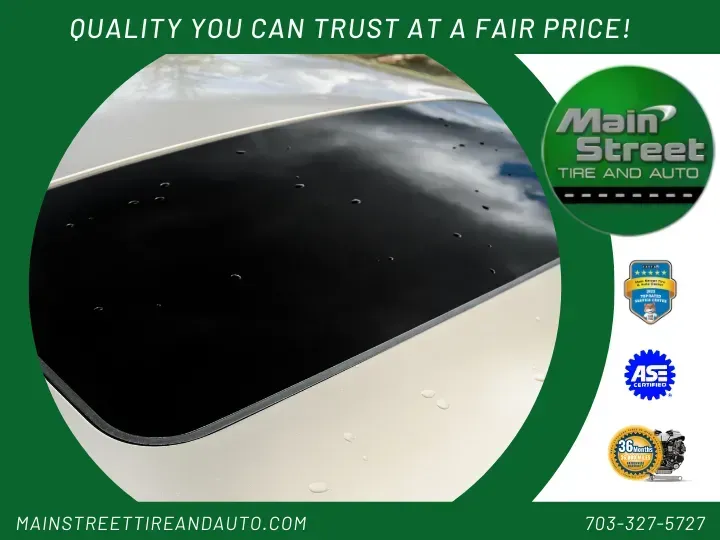
What do I do if my sun roof is leaking?
What Do I Do If My Sunroof Is Leaking? Causes, Risks, and the Right Way to Fix It
You get into your vehicle after a rainstorm in Northern Virginia and something feels off. The air smells damp. The headliner looks darker than it should. You see moisture running down the A-pillar, or you notice a drip from the overhead console. You reach up, touch the headliner, and confirm what you hoped wasn’t true: your sunroof is leaking.
It’s frustrating, unexpected, and inconvenient. And worst of all, it raises a question most drivers don’t know how to answer:
Why is my sunroof leaking when the glass is fully closed?
Here’s the truth: a sunroof is not designed to be completely watertight. Unlike your windshield, it’s part of a controlled water-management system. Water is supposed to get past the outer seal—but it’s supposed to be caught in a drainage tray and guided through tubes that run down the pillars and exit beneath the vehicle. When any part of that system is clogged, worn, misaligned, or damaged, the water has nowhere to go but inside.
Drivers across Chantilly, South Riding, Ashburn, Aldie, Dulles, Centreville, Herndon, Sterling, and Fairfax experience sunroof leaks more often than they realize. Northern Virginia weather—humid summers, heavy storms, massive pollen cycles, and tree debris from wooded neighborhoods—creates the perfect environment for sunroof drain issues.
If your sunroof is leaking, you need clarity and direction. Below is your complete breakdown:
- Why sunroofs leak
- What damage a leak can cause
- What to do immediately
- Why DIY methods usually fail
- How professionals diagnose the real issue
- How the Northern Virginia climate contributes to leaks
- How to prevent leaks in the future
This is the exact type of “what you need to know” breakdown every driver wishes they had when water starts dripping overhead.
Why Sunroofs Leak: The Real Causes Most Drivers Never Hear About
A sunroof is a system. It’s not just glass and a rubber seal. It includes:
- A sunroof glass panel
- A drainage tray beneath it
- Drain tubes that run down the pillars
- Tracks and mechanical rails
- Electric motors and gears
- Rubber perimeter seals
If any one of these components fails, the system can no longer manage water correctly.
Here are the most common causes.
1. Clogged Sunroof Drain Tubes (The #1 Cause in Northern Virginia)
This is by far the most frequent reason for a leaking sunroof.
Your sunroof has four drain tubes—one in each corner—that route water down through the A- or C-pillars and out the bottom of the vehicle. When these tubes clog from debris, the water has nowhere to go.
In Northern Virginia, clogs commonly come from:
- Heavy spring pollen
- Pine needles
- Oak tree debris
- Dust and dirt from construction-heavy areas like Ashburn and South Riding
- Fine debris from windy days around Dulles
- Leaves from wooded neighborhoods in Chantilly and Centreville
Once a drain tube is clogged:
- Water fills the tray
- It overflows the edges
- It runs into the headliner
- It drips into the overhead console
- It flows down the pillars or into the interior
2. Worn, Dried, or Shrinking Sunroof Seals
- Dry out
- Crack
- Shrink
- Harden
- Flatten
3. Misalignment of the Sunroof Glass or Track Mechanism
- A track is worn
- The motor is weak
- The rails are dirty
- The sunroof encounters resistance
- A mechanical component bends
Symptoms of misalignment include:
- A sunroof that closes unevenly
- Clicking or grinding noises
- A visible height difference between corners
- Rough opening or closing
4. Cracked or Warped Sunroof Frame
- Age
- Heat cycles
- Structural flex
- Previous bodywork
- Heavy debris impact
- Manufacturing fatigue in older vehicles
5. Hidden Body or Roof Damage
- Seal compression
- Drain flow direction
- Sunroof alignment
- Water routing paths
The Hidden Dangers of Ignoring a Leaking Sunroof
1. Mold and Mildew Growth in the Interior
- Headliner insulation
- Carpet padding
- Seat foam
- Interior trim
- Floor insulation
2. Electrical and Sensor Damage
- Airbag wiring
- Sensor harnesses
- Dome light wiring
- Sunroof motor wiring
- Overhead console electronics
3. Interior Material Damage
- Headliner fabric
- Adhesive layers
- Trim panels
- Foam insulation
- Upholstery backing
4. Rust and Corrosion in Hidden Areas
- Floor pans
- Seat mount points
- Lower pillars
- Door sills
- Under-carpet metal
5. Safety System Risks
Water near electrical circuits for curtain airbags can compromise their reliability.
What To Do Immediately When Your Sunroof Is Leaking
- Close the Sunroof Gently and Avoid Repeated Operation
- Absorb Moisture Immediately
- Inspect Visible Drain Points (Without Sticking Anything in Them)
- Protect the Interior if More Rain is Coming
- Avoid Using Overhead Electronics
Why DIY Fixes Usually Make Sunroof Leaks Worse
- Poking Drain Tubes With Tools
- Applying Sealant or Silicone
- Misdiagnosing the Source
- Limited Access to Hidden Components
How Professionals Diagnose and Repair Sunroof Leaks
- Drainage System Flow Test
- Controlled Leak Replication
- Sunroof Alignment Check
- Seal and Frame Evaluation
- Interior and Electrical Assessment
How to Prevent Sunroof Leaks
- Have the Drains Inspected Annually
- Keep the Roof and Track Areas Clean
- Maintain Healthy Rubber Seals
- Avoid Parking Under Heavy-Shedding Trees
- Add Sunroof Inspection to Routine Maintenance
When to Get a Sunroof Leak Inspected Immediately
- Dripping from overhead
- Water in the cupholder or floor
- Wet headliner
- Moisture around pillars
- Musty odors
- Foggy windows on dry days
- Electrical issues near the overhead console
Protect Your Vehicle’s Interior, Electronics, and Long-Term Health
A leaking sunroof is not a cosmetic issue. It’s a systems failure:
- Drainage
- Sealing
- Mechanical alignment
- Frame support
- Interior integrity
- Electrical safety
Professional diagnosis is the fastest and safest way to stop the damage and prevent future issues.
Main Street Tire and Auto
43141 Town Hall Plaza
Chantilly, VA 20152
Phone: (703) 327-5727
Website: https://mainstreettireandauto.com/
You can watch the video