What Does It Mean When You Hear a Clicking Noise When Turning?
A clicking noise when turning is one of the clearest signs that your vehicle needs attention. Even if the car still feels drivable, that sound often means a steering, suspension, or driveline component is wearing down.
The best move is early diagnosis. Not because every click is an emergency, but because early action protects safety, prevents secondary damage, and keeps your vehicle dependable.
A true customer-first approach is not about selling fear. It is about giving you accurate answers, clear priorities, and recommendations that serve your best interest.
Why Clicking During Turns Is a Meaningful Warning
When you turn the wheel, multiple systems move and load together:
- CV axles and joints
- Steering linkage
- Suspension joints and bushings
- Wheel bearings/hubs
- Brake hardware
If one component is worn, loose, or damaged, the change in load angle during turns can produce a clicking noise. The sound is the symptom. The priority is finding the root cause.
If ignored, clicking can eventually contribute to:
- Reduced steering precision
- Premature tire wear
- Additional stress on related components
- Increased safety risk during quick maneuvers
Most Common Cause: CV Joint Wear
In many vehicles—especially front-wheel-drive and all-wheel-drive—the top cause of clicking while turning is a worn CV joint.
What CV joints do
CV joints transfer engine power through the axle while allowing suspension travel and steering movement.
Why they click
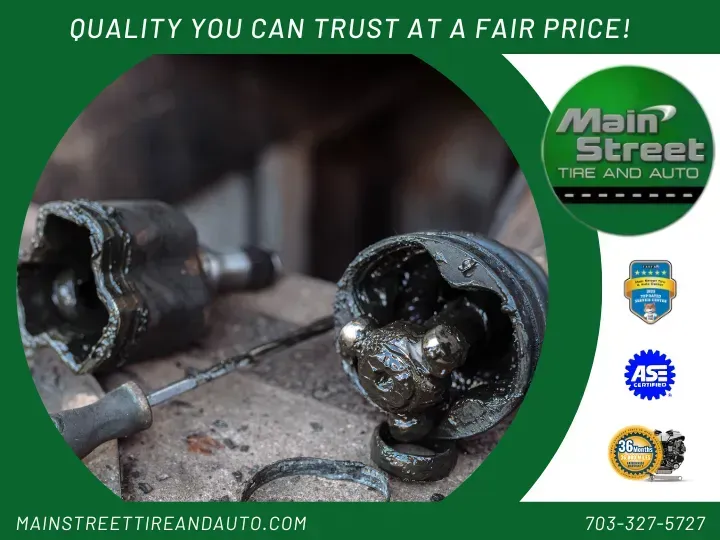
Each joint is protected by a rubber boot packed with grease. If the boot tears:
- Grease escapes
- Dirt and moisture get in
- Internal wear accelerates
- Clicking begins, especially during turns
Typical symptom pattern
- Repetitive click-click-click in tighter turns
- Louder with light acceleration while turning
- Often more noticeable turning one direction
Once wear starts, it usually progresses.
Other Possible Causes of Clicking Noise While Turning
CV joints are common, but not the only explanation.
1) Suspension Joint Wear
Worn ball joints, sway bar links, control arm bushings, or tie rod ends can click/clunk as weight transfers in turns.
Possible clues:
- Noise on bumps and turns
- Front-end looseness
- Uneven tire wear
2) Steering Linkage Play
Wear in tie rods or related steering components can create clicking at low speeds.
Possible clues:
- Slight steering dead zone
- Reduced response precision
- Clicking while parking or making U-turns
3) Brake Hardware Movement
Loose or worn brake hardware can shift under turning load and make tapping/clicking sounds.
Possible clues:
- Intermittent clicks
- Sound after recent brake work
- Noise entering driveways or angled surfaces
4) Wheel Bearing/Hub Concerns
Wheel bearings more commonly hum, but some conditions cause clicking when side-load changes during turns.
Possible clues:
- Noise differs left vs. right turn
- Sound increases with speed
- Possible vibration as wear worsens
5) Driveline or Mount Movement
Axle interface movement or worn mounts can click during torque transfer in turns.
Possible clues:
- Click with slight jolt
- Most obvious in parking lot maneuvers
- Noise with throttle transitions
Safe Checks You Can Do Before Scheduling Service
You can gather useful observations safely without taking mechanical risks.
In an empty lot:
- Turn fully left and drive slowly in a circle
- Turn fully right and repeat
- Listen for rhythm, direction, and volume changes
- Note whether light acceleration makes it louder
Also look for:
- Steering vibration
- Pulling left/right
- Warning lights
- Grease near inner front wheel area (possible torn CV boot)
Do not crawl under the vehicle unless properly equipped and trained.
When to Treat It as Urgent
Arrange immediate inspection if:
- Clicking becomes loud, constant, or suddenly worse
- Steering feels unstable, loose, or delayed
- Grinding joins the clicking
- Vehicle jerks/binds in turns
- Strong low-speed vibration appears
These can indicate higher safety risk.
Why Early Diagnosis Is Customer-First
Customer-first service means helping you prevent bigger issues, not waiting for failure.
Early diagnosis helps you:
- Identify the actual cause quickly
- Prevent damage to related systems
- Protect tire life and alignment
- Maintain safe, predictable handling
A thorough inspection should include:
- Road test to reproduce the noise
- Steering and suspension play checks
- CV boot/axle inspection
- Brake hardware verification
- Wheel hub/bearing evaluation
You should receive a clear explanation of what failed, why it matters, and what should be prioritized first.
What You Should Expect From a Trustworthy Shop
A customer-first experience should include:
- Careful listening to your concern
- Consistent symptom verification
- Root-cause diagnosis (not guesswork)
- Transparent urgency and safety guidance
- Recommendations aligned with your best interest
That is how trust is built—and how long-term vehicle reliability is protected.
Local Driving Conditions Around Chantilly and Nearby Areas
Vehicles in Chantilly, South Riding, Aldie, Centreville, Fairfax, Herndon, Reston, Sterling, Ashburn, Leesburg, Burke, Manassas, Haymarket, and Gainesville often operate in conditions that can accelerate wear on steering and driveline components:
- Stop-and-go commuter traffic
- Frequent turning in dense retail/residential areas
- Potholes and uneven pavement transitions
- Seasonal temperature changes affecting rubber boots and bushings
Because local driving patterns can speed wear, clicking noises should be checked early.
What To Do Next If Your Car Clicks While Turning
Document the pattern
Which direction, what speed, throttle input, road type.
Drive conservatively
Avoid hard cornering and sharp acceleration in turns.
Schedule an inspection promptly
Repeatable clicking deserves professional diagnosis.
Ask for root cause and urgency
Get clear guidance on safety and timing.
Address priority repairs early
Steering and driveline issues rarely improve by waiting.
Final Takeaway
A clicking noise when turning is a valuable early warning. Taking it seriously now is one of the smartest things you can do for safety, reliability, and long-term vehicle health.
If you are hearing that sound, the right next step is a clear, customer-first inspection and a plan built around your best interest.
You can watch the video