
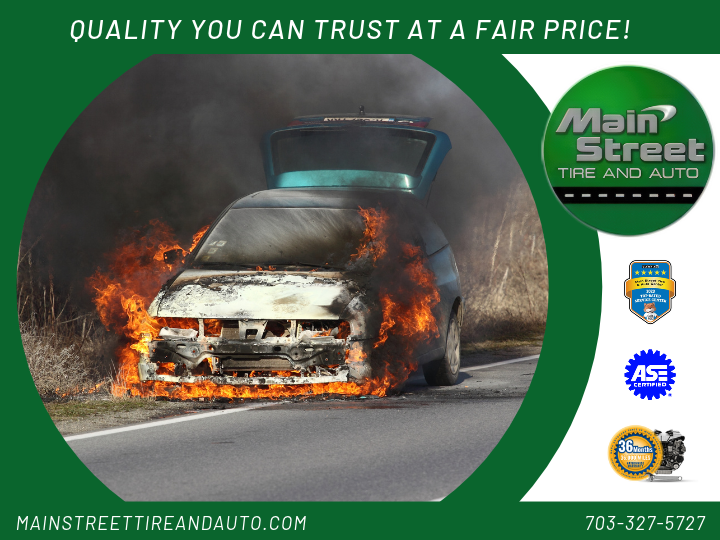
Burning Smell From Car in South Riding, VA: Normal or Not?
Burning Smell From Car in South Riding, VA: Normal or Not?
Burning Smell From Your Car in South Riding, VA: Is It Normal After Service, or a Problem?
You picked the car up yesterday with fresh brakes. This afternoon, sitting in the school pickup line with the kids about to climb in, you notice a warm, slightly sharp smell. Is that what new brakes smell like? Or is something wrong?
It is a fair question, and it comes up more often than you might think. A burning smell from your car is sometimes completely normal, particularly in the first days after new brakes, an oil change, exhaust work, or on a brand-new vehicle. New parts have coatings and residues that burn away the first few times they get hot. Other times, a burning smell is the first sign of a leak, a brake that is dragging, or an electrical fault, and it needs attention.
The difference between the two is usually clear once you know what to look for. This guide from Main Street Tire and Auto explains which smells are expected, how long they should last, which ones are not normal, and what to do when a smell shows up with no recent service to explain it.
First, the Safety Check
Before sorting normal from not normal, rule out the situations where you should not keep driving, especially with passengers aboard.
Stop in a safe place, turn the vehicle off, and get everyone out if you see smoke coming from under the hood, from a wheel, or inside the cabin. Do the same if the smell is like melting plastic or hot wiring and it is getting stronger, if the temperature gauge is climbing, if a red warning light has come on, if you smell fuel, or if the brake pedal feels soft or different.
If there is smoke or flame, move everyone well away from the vehicle and call 911. Leave the hood closed, because opening it gives a fire more air.
With children in the car, the rule is simple: when in doubt, get out. A few minutes standing on the sidewalk costs nothing.
If none of that applies, read on.
The Four Signs of a Normal Burn-Off Smell
Smells that come from new parts and recent service share four traits.
- There is a recent event that explains it. New parts, fluid service, or a new vehicle within the last few days.
- It is mild. Noticeable, but not strong enough to make you roll the windows down.
- It fades steadily. Each drive, it is a little weaker than the drive before, and it is gone within a few days of normal driving.
- Nothing else is wrong. No warning lights, no drips under the car, no ongoing smoke, no change in how the vehicle drives or stops.
If all four are true, you are almost certainly dealing with normal burn-off. If any one of them is not, call the shop that did the work.
After New Brakes
This is the most common source of the question.
What is normal
Brake pads are made with resins that finish curing the first few times the brakes get up to temperature. New rotors often come with a thin protective coating that keeps them from rusting in the box, and that coating burns off in the first stops. Together they can produce a mild, warm, slightly chemical smell during the first stretch of driving, especially after a few firmer stops.
During that same period the pads and rotors are wearing in to each other. Drive normally, avoid repeated hard stops where you can, and the smell will disappear on its own.
What is not
Pay attention if the smell is strong, if it is still there after several days, or if it is clearly coming from one wheel. Other warning signs are a wheel that is much hotter than the others, smoke from a wheel, the car pulling to one side, or a pedal that feels soft or sinks.
Those point to a brake that is not releasing, a problem with a caliper or hose, or air in the system. Bring the vehicle back right away. A dragging brake overheats quickly and does not stop as well as it should.
After an Oil Change
What is normal
On many engines, the oil filter and the fill opening sit above other components. When the filter comes off or the new oil goes in, a small amount can run onto the engine or the exhaust even with careful work and a thorough wipe-down. That oil burns off as the exhaust heats up, producing a light, bitter smell for a drive or two.
What is not
A smell that gets stronger, visible smoke from under the hood that continues, fresh oil spots where you park, or an oil warning light are all reasons to stop driving and call. Possible causes include a filter or drain plug that is not sealing, or the seal from the old filter sticking to the engine so the new filter cannot seat properly.
One quick check you can do yourself, with the engine off and cool: make sure the oil fill cap on top of the engine is in place and tight. A missing cap lets oil mist out onto hot parts.
After New Tires or Wheel Work
New tires have a distinct rubber smell that you may notice in the garage for a week or so. That is not burning. It comes from the tire itself and fades.
A true burning rubber smell after tire or wheel work is not normal. If the new tires or wheels are a different size from the originals, they may be contacting a suspension part or the liner inside the wheel well, particularly when turning or going over bumps. A wheel well liner that was not fully re-secured can do the same. Have it looked at promptly, because a tire that rubs will eventually be damaged.
After Exhaust, Engine, or Cooling System Repairs
New exhaust components often carry oils and coatings from manufacturing. These burn off in the first drive or two and can even produce a little light smoke from under the vehicle. It should be finished quickly.
After cooling system work, a small amount of spilled coolant on the engine can produce a sweet smell for a short time. If the sweet smell continues, or the temperature gauge reads higher than you are used to, the system should be rechecked for a leak.
After any repair that involved the engine, a little leftover cleaner or fluid residue can smell the first time everything gets fully hot. The same four signs apply: mild, explained, fading, and nothing else wrong.
On a Brand-New Vehicle
New vehicles come with protective coatings on the exhaust system, the engine, and various underbody parts. As those burn away over the first weeks of driving, a warm or slightly burning smell after you park is common, especially in the garage. It fades as the miles add up.
If a new vehicle has a strong smell, any smoke, or a warning light, that is a different matter. Contact the dealer, since it will be covered under the new vehicle warranty. Keep your service records in any case, including work done at an independent shop, so your maintenance history is documented.
One That Is Never Normal: Electrical Work
If a burning smell appears after a battery replacement, a new stereo, a dash camera, a trailer wiring kit, or any other electrical work, do not wait for it to fade. Properly done electrical work has no burn-off period. A smell of hot plastic means something is overheating, and the vehicle should go back to whoever did the work.
How to Go Back to the Shop
Some people hesitate to call a shop about a smell after a repair, either because they do not want to seem like they are complaining or because they assume it is nothing.
Please call. Any shop that cares about its work wants to hear about it right away. A quick recheck takes a few minutes, and either you leave reassured or a small issue gets corrected before it becomes a larger one. Tell them what the smell is like, when you notice it, and whether it is fading. Do not let anyone make you feel that the question was unwelcome.
When There Is No Recent Service to Explain It
If nothing has been done to the vehicle lately, the smell is coming from a part that has changed. These are the usual sources of a burning smell from your car.
Oil leaking onto the exhaust. A bitter, sharp smell, most noticeable when stopped. Engine gaskets harden with age, and the one at the valve cover on top of the engine is the most common leak point.
Coolant. A sweet, syrupy smell. Watch the temperature gauge, and stop if it rises.
A slipping drive belt. Burning rubber, often with a squeal, from the belt that runs the alternator and air conditioning compressor.
A dragging brake. A harsh, acrid smell at one wheel after a normal drive, often with heavy dark dust on that wheel.
A parking brake left on. It happens to everyone eventually, and it happens to new drivers most of all. The smell comes from the rear of the vehicle. If you have a teenager learning to drive, this is a good one to mention.
Overheated transmission fluid. A harsh burnt odor, different from oil, sometimes noticed after towing or heavy loads.
Electrical heat. Hot plastic from the vents or dash, a fan that works on only some speeds, or a fuse that keeps blowing. Never install a larger fuse to solve it.
Debris on the exhaust. A plastic bag or a piece of sheeting melted onto the exhaust smells strongly of burning plastic from outside and underneath the vehicle. It usually burns away.
Heater dust. A dusty, toasted smell for a few minutes the first time the heat comes on in the fall is normal.
How Driving Around South Riding Plays Into It
The way this community drives influences what we see in the shop.
Pickup lines and idling. A long idle with the heat or air conditioning running lets warmth and fumes rise from the engine compartment with no airflow to carry them off, and the ventilation system draws them inside. That is why so many parents first notice a smell while waiting in line. It does not mean the line caused it. It means the conditions were right to notice it.
Commuter traffic. The daily runs on US Route 50 and Route 28 toward Dulles and the Chantilly business corridor mean long stretches of stop-and-go. Brakes stay warm and engine compartments stay hot.
A growing area with ongoing construction. With building continuing around Stone Ridge, Arcola, and Brambleton, there is more debris on the roads than in an established neighborhood. Plastic sheeting, bags, and packaging find their way onto exhaust pipes.
Freeze and thaw. Winter in Northern Virginia breaks up pavement. A hard pothole hit on Braddock Road or Gum Spring Road can tear a plastic underbody shield loose or shift a wheel well liner so that it touches a tire or the exhaust.
Road treatments. The salt and brine used in winter corrode brake hardware. Sticking brakes become more common toward the end of winter and into spring.
Leaves and pollen. Debris collects at the base of the windshield, where the ventilation system draws in outside air. Leaves that work their way down near hot parts can smell like something burning.
Summer heat. Hot, humid summers and heavy thunderstorms put the greatest load on cooling systems and air conditioning.
What Happens If a Real Problem Is Left Alone
Normal burn-off takes care of itself. A real problem does the opposite.
An oil leak lowers the oil level over time and damages the belts and hoses it drips on. A coolant leak can lead to overheating, which can seriously damage an engine in a short distance. A dragging brake wears out its pads and rotor and reduces braking on that wheel. An electrical fault gets hotter as the connection degrades and is a fire risk.
For a vehicle that carries your family every day, a short inspection is easy insurance.
What a Good Inspection Looks Like
A technician starts with your description, then confirms it with the vehicle. Fluids are checked for level and condition. The engine is inspected from above and, on a lift, from below for fresh leaks and residue on hot parts. Belts and pulleys are examined. Each brake is checked for free movement, even wear, and signs of overheating. Tires and wheel wells are inspected for rub marks. If the smell points to the electrical system, the related circuits are tested, and a computer scan is run for stored fault codes.
You should receive a clear explanation of what was found, how urgent it is, and what your options are, in priority order. [link to vehicle diagnostics page]
What Affects the Cost, and How to Think About Value
The cost of dealing with a burning smell ranges from nothing at all to a significant repair, depending on the cause.
Normal burn-off costs nothing. A recheck after recent service is a courtesy any reputable shop extends.
Early problems are small. A gasket, a belt, or a brake that needs cleaning and new hardware is a modest repair when it is caught at the first sign.
Delayed problems grow. A leak that has soaked other parts, a brake that has overheated its rotor, or wiring that has been damaged by heat all cost considerably more than they would have earlier.
Labor and parts vary by vehicle. Access differs from one engine to another, and domestic, Asian, and European vehicles each have their own parts.
Quality lasts. Good parts and the correct fluids cost a little more and last far longer, which lowers what you pay per mile over the time you own the vehicle.
For a family, the real value is dependability. A vehicle that is kept in sound condition will serve for many more years, and that is far less expensive than replacing it early.
How Main Street Tire and Auto Handles It
Main Street Tire and Auto has served South Riding since 2008, and many of the vehicles we see are the ones families rely on every single day. We take that seriously.
If you notice a smell after we have worked on your vehicle, we want you to call us. We will take a look, tell you whether it is normal burn-off or something to correct, and make it right if it is ours to fix. If the smell has nothing to do with recent service, we will find the cause, show you what we found, and lay out clear priorities so you can decide what to do and when.
Our team services domestic, Asian, and European vehicles, and our work includes brakes, tires, suspension, oil changes, and full-service diagnosis and repair. [link to brake service page] [link to oil change page]
Frequently Asked Questions
How long should new brakes smell? A mild smell during the first stretch of normal driving is expected as the pads cure and the rotor coating burns off. It should fade steadily and be gone within a few days. A strong smell, a smell from only one wheel, or one that lasts longer should be rechecked.
Is a burning smell after an oil change normal? A light smell for a drive or two is common, from a small amount of oil that reached the engine or exhaust during the service. Smoke that continues, drips on the ground, a stronger smell, or an oil light are not normal. Stop driving and call the shop.
Why do I only notice the smell in the school pickup line in South Riding? At idle there is no airflow moving heat and fumes away from the engine, so they rise and get pulled into the cabin through the ventilation intake. The smell was likely there before. The pickup line is simply where you were sitting still long enough to notice it.
How much does it cost to fix a burning smell? If it is normal burn-off, nothing. If it is a real problem caught early, usually a modest repair. Costs rise when a problem is left long enough to damage other parts, which is why an early check is worthwhile.
My teenager left the parking brake on. Is the car damaged? A short drive with the parking brake partly on usually leaves only a smell. A longer drive can overheat the rear brakes. If the smell lingers, the brake pedal feels different, or the car does not roll freely, have the rear brakes inspected.
Is it safe to drive on Route 50 or Route 28 with a burning smell? Not if there is smoke, a warning light, a rising temperature gauge, or an electrical smell. Heavy traffic and highway speeds are a poor place to break down. A faint smell with everything else normal can usually make a short trip on local streets to the shop.
My new car smells like something is burning when I park it in the garage. Should I worry? A warm smell after parking is common in the first weeks as factory coatings on the exhaust and engine burn off. It should fade with use. A strong smell, smoke, or any warning light should be checked by the dealer under warranty.
Not Sure Which Kind You Have? Ask Us
A burning smell from your car does not have to be a mystery or a worry. Whether you commute to Ashburn, head out US Route 50 toward Aldie on the weekends, or spend most of your week between school, practice, and the grocery store, a few minutes with a technician will tell you whether it is normal or needs attention.
Call Main Street Tire and Auto or stop by, and we will take a look. [link to appointment scheduling page]
Main Street Tire and Auto
43141 Town Hall Plaza, Chantilly, VA 20152
(703) 327-5727
https://mainstreettireandauto.com/
You can watch the video